Alumnus – May
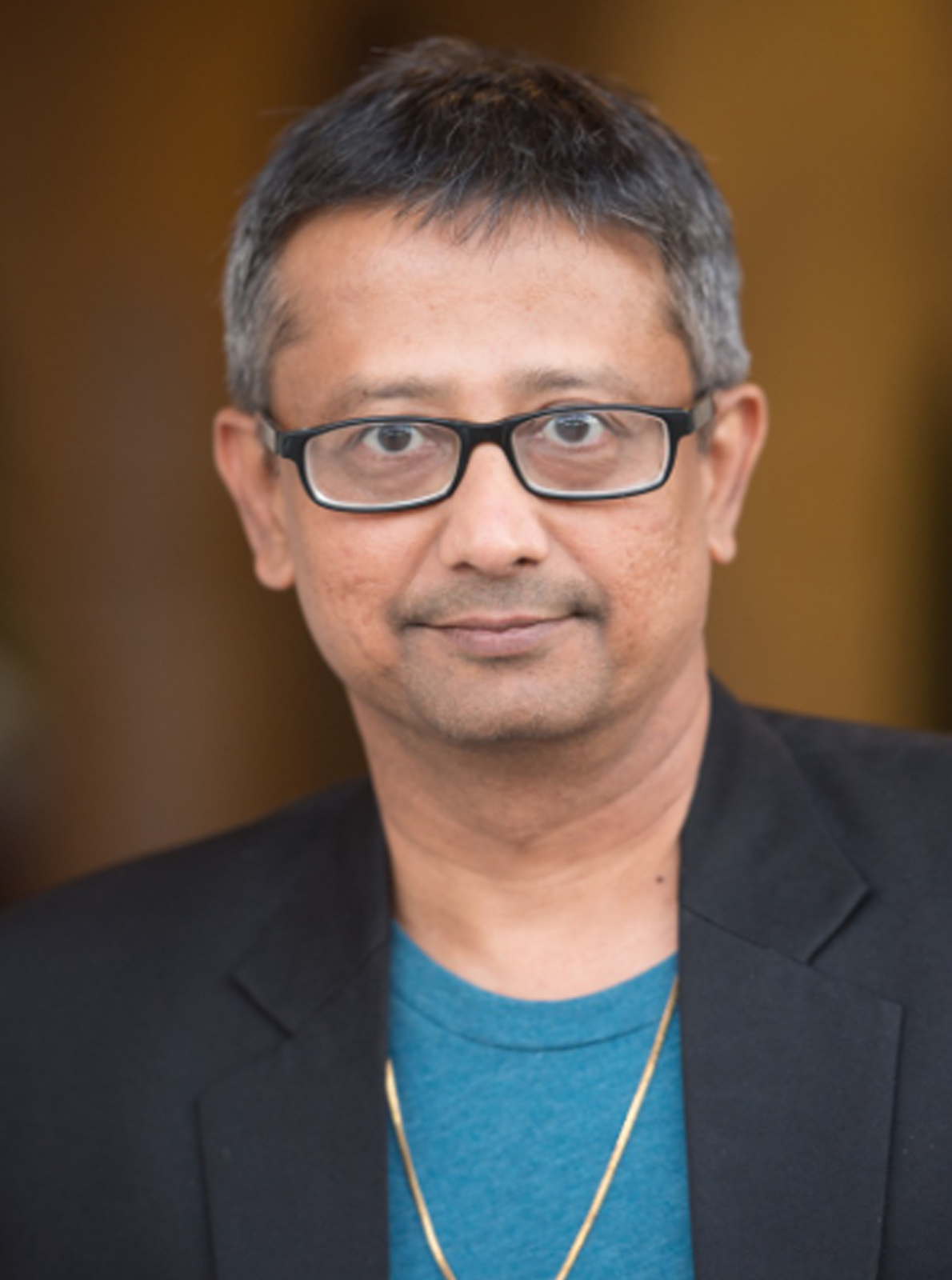
Dr Janak shah
Dr Janak shah
UG 1986
Mumbai, India
From his early years as a merit rank holder in Mumbai to becoming an internationally respected ophthalmic surgeon, his journey reflects both intellectual rigor and deep compassion. He completed his MBBS and ophthalmology training at Seth G.S. Medical College & KEM Hospital, followed by further specialization with an M.Med in Ireland and a fellowship in pediatric ophthalmology in Brazil, shaping a career that seamlessly integrates global exposure with local impact.
Today, as Director of Netrapuja Eye Care and Research Center in Mumbai, Dr. Shah leads a center dedicated not only to high-quality clinical care but also to research, training, and outreach. His expertise in anterior segment and pediatric ophthalmology places him at the forefront of both complex surgical care and early-life vision preservation. At the same time, he continues to serve as a visiting consultant at multiple institutions across India, including Bhavnagar, Kutch, Siliguri, and Mumbai—bringing advanced ophthalmic care directly to communities that need it most.
What truly distinguishes Dr. Shah is the scale and consistency of his humanitarian work. Over the past 25+ years, he has participated in more than 200 surgical eye missions and performed over 20,000 sight-restoring surgeries across more than 20 countries. His work has taken him from structured hospital environments to some of the most challenging settings in the world—including remote regions where infrastructure is minimal, and adaptability is essential. In these environments, he has demonstrated that excellence in medicine is not dependent on technology alone, but on skill, innovation, and a commitment to serve.
An advocate of Manual Small Incision Cataract Surgery (MSICS) in India, Dr. Shah recognized early that scalable, cost-effective solutions were critical to addressing preventable blindness in resource-limited settings. Rather than limiting his impact to his own surgical practice, he chose to focus on teaching, conducting workshops, and training programs at premier global institutions such as the New York Eye & Ear Infirmary, Albert Einstein College of Medicine, Wills Eye Hospital in the United States, and the Royal College of Ophthalmologists in the UK. Through these efforts, he has trained hundreds of surgeons worldwide, creating a multiplier effect that continues to expand access to quality eye care.
His commitment to pediatric ophthalmology is particularly profound. Dr. Shah understands that restoring vision in a child is not just a medical intervention—it is a life-altering opportunity. Through his sustained work in Bhavnagar, especially at PNR Hospital, he has helped treat children with cataracts, glaucoma, squint, ptosis, and other vision disorders, free of cost. These interventions do more than restore sight; they restore confidence, social integration, and the possibility of a full and productive life. His work has also helped raise awareness among parents and communities, ensuring that eye conditions are identified and treated early.
In addition to his clinical and humanitarian achievements, Dr. Shah has made significant academic contributions. He has been a speaker and moderator at international conferences across continents and a co-author of educational modules on cataract surgery for the developing world through the American Academy of Ophthalmology. His work reflects a rare ability to bridge practice and pedagogy—advancing both the science and the accessibility of eye care globally.
His contributions have been widely recognized through numerous honors, including humanitarian awards from SEE International, the Ophthalmic Hero of India Award, recognition from the International Agency for the Prevention of Blindness, and even a certificate of honor from the President of Peru for his medical mission work. These accolades, while significant, are ultimately reflections of a deeper truth: that his work has transformed thousands of lives across the world.
Beyond medicine, Dr. Shah’s life reflects a well-rounded and engaged personality. During his student years, he actively contributed to cultural life, serving as a committee member of major events such as Fusion and Aavishkaar, and represented his institution in multiple sports. These experiences speak to a leadership style that is collaborative, energetic, and grounded in community.
At the heart of Dr. Shah’s journey is a guiding philosophy rooted in humility and service—that medicine is not merely a profession, but a responsibility. He believes that the true measure of a doctor lies not only in surgical outcomes, but in the ability to bring dignity, hope, and healing to those most in need.
Dr. Janak Shah embodies the spirit of GOSUMEC:
a physician who heals, a teacher who multiplies impact, and a humanitarian who reminds us that the greatest legacy in medicine is not what we achieve, but what we give.
Alumnus – March
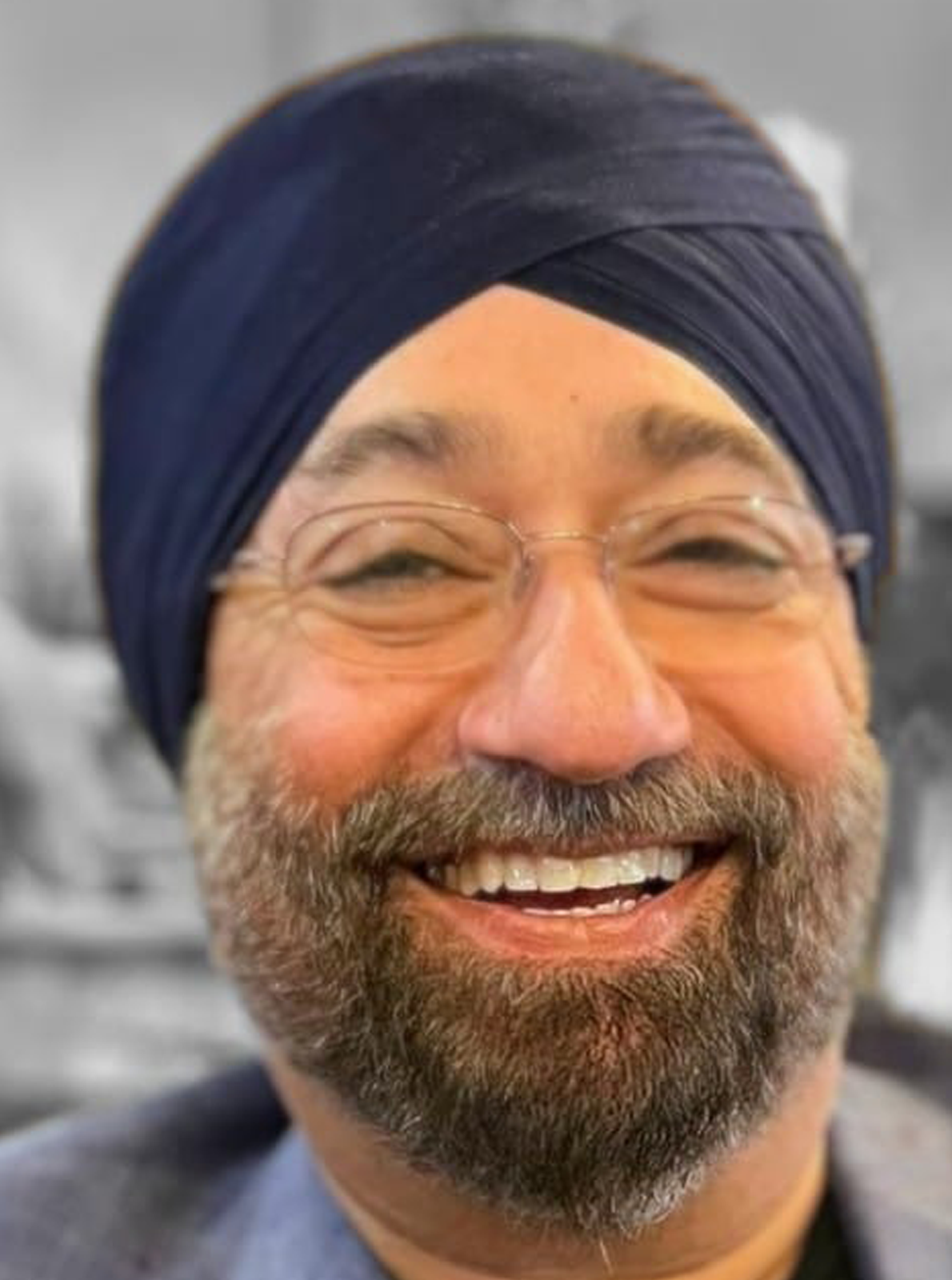
Dr. Paramjit “Romi” Chopra
Dr. Paramjit “Romi” Chopra
UG 1979
Immersed in cardiovascular and interventional research, quality improvement, and systems engineering, he quickly distinguished himself through efficiency and innovation. His work was presented at RSNA and published in leading journals, leading to a clinical fellowship, repeat residency, and board eligibility in Radiology. He also served as Associate Director of Quality Management, contributing to early work in healthcare process improvement.
In 1994, he became Chief of Interventional Radiology at SUNY Upstate and a tenured Associate Professor, where he rebuilt and expanded the division. He was later recruited to Rush University Medical Center to modernize its interventional radiology program and soon became Chairman of Radiology, tasked with leading a comprehensive departmental transformation.
After experiencing the structural constraints of academic medicine, Dr. Chopra made another defining decision. Inspired by the belief that real-world systems impact often requires entrepreneurial freedom, he stepped out of traditional academic confines—while continuing scholarly engagement—and entered the broader healthcare landscape to build scalable, patient-centered systems.
He founded MIMIT Health, which evolved into a multispecialty medical group providing endovascular surgery, interventional radiology, general surgery, and other advanced services. As the organization grew, he recognized the central importance of technology architecture and operational platforms. This insight led to the creation of CIMSS Innovative Solutions (Comprehensive Integrated Management Systems and Solutions), a healthcare management and technology services organization that designs and implements digital platforms, business systems, and integrated care models.
All of Dr. Chopra’s ventures are guided by a core belief: business must serve humanity. With that principle, he founded Sangat Seva, a charitable organization focused on healthcare access, education, research, and human well-being. He has supported and sponsored multiple students through alumni foundations, including those facing financial hardship—viewing this not as charity, but as an investment in humanity.
Over the course of his career, Dr. Chopra has published extensively, taught and mentored generations of physicians, and lectured internationally. He has traveled widely across the globe, sharing insights on interventional radiology, healthcare systems, quality management, and innovation. His contributions to medicine and service have been recognized nationally, including the awarding of two United States Congressional Medals.
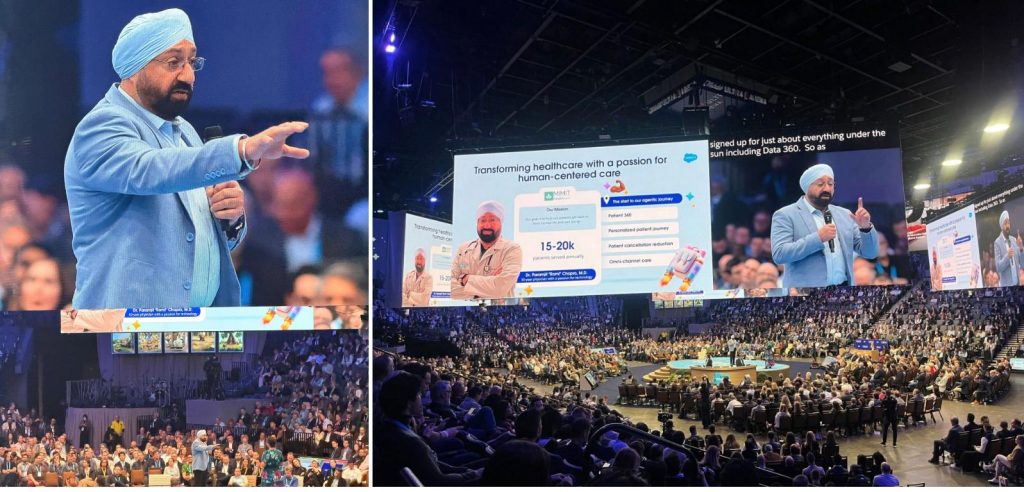
Today, Dr. Chopra leads a federation of organizations that span clinical care, technology architecture, consulting, and healthcare transformation. He remains actively engaged in clinical medicine—performing procedures and surgeries—while simultaneously architecting next-generation healthcare platforms, guiding development teams, and mentoring future leaders.
He lives and works at the intersection of three identities: physician, entrepreneur, and technologist. At the same time, he remains deeply spiritual. His philosophy integrates holistic and traditional wisdom with advanced digital systems—what he describes as a journey from “meditation to AI.” For him, technology and spirituality are complementary tools in the service of human flourishing.
His mission remains constant: to help people live longer, better lives by building systems that are patient-centered, connected, efficient, and compassionate—doing better, faster, and more intelligently—while educating and uplifting the next generation, from high school students to seasoned physicians.
From the halls of GS Medical College to Harvard, from academic leadership to global healthcare innovation, Dr. Paramjit “Romi” Chopra’s journey reflects resilience, vision, reinvention, and an unwavering commitment to service.
Alumnus – February
Dr. Manoj Singrakhia

Dr Manoj Singrakhia
UG 1992
Orthopedic Spine Surgeon | Artist
Mumbai & Nagpur, India
Dr. Manoj Singrakhia embodies a rare synthesis of healing and artistry. A distinguished alumnus of Seth Gordhandas Sunderdas Medical College & KEM Hospital, he has built a career anchored in clinical excellence while pursuing a parallel creative calling that gives visual form to the human experiences he witnesses daily in medicine.
A Career Built on Precision and Compassion
After graduating from GOSUMEC, Dr. Singrakhia pursued advanced training in spine surgery across India, the United States, and Canada. He now serves as Founder and Director of Shanta Spine Hospital in Nagpur, bringing specialized care to patients with complex spinal conditions. His academic contributions include publications and book chapters that advance the field of spinal surgery, and he has held faculty appointments at medical colleges throughout Maharashtra.
The Artist-Surgeon: Where Two Worlds Meet
Dr. Singrakhia’s artistic practice emerged from the same space as his medical work—the operating room, where he encounters human vulnerability in its rawest form. In 2022, he formalized this creative pursuit by completing a Graduate Diploma in Fine Arts at the Royal College of Art, London, bridging the technical precision of surgery with the expressive freedom of visual art.
His work occupies a territory between Impressionism and Expressionism, rendered in oil, ink, watercolor, and charcoal. What sets his figurative paintings apart is a deliberate choice: he omits facial features. This absence transforms individual subjects into universal vessels, allowing viewers to project their own stories and emotions onto faceless forms. The technique shifts focus from personal identity to shared human experience—suffering, resilience, joy, transformation.
Symbolizing a Century of Healing

Dr. Singrakhia’s artwork graces the cover of the Centenary Volume commemorating 100 years of Seth Gordhandas Sunderdas Medical College & KEM Hospital (1925–2025). The image functions as visual storytelling, translating institutional memory into symbolic language.
Winged sandals and an elixir bag evoke the hospital’s journey through time—movement, healing, the constant work of medicine. Green tones suggest calm and recovery, the quiet aftermath of crisis. Bold reds and umbers in the foreground represent the diseases and struggles that have entered KEM’s doors across generations. The figure moves forward, embodying the hospital’s continued commitment to healing, its work extending into an open future.
This is not decoration but narrative—a century of care condensed into color, form, and motion.
Exhibitions: Building a Body of Work

Dr. Singrakhia has exhibited extensively in India and abroad, establishing himself within contemporary art circles while maintaining his surgical practice.
Solo Exhibitions
- Unseen — Nehru Centre, Mumbai (2025)
- Flow — Jehangir Art Gallery, Mumbai (2025)
- Unseen / Flow — Dubai International Art Centre (2026)
Group Exhibitions
- London, Nagpur, Mumbai, Dubai (2022–2025)
His signature series—Unseen, Flow, Raga, and Divine—explore themes of identity, spirituality, movement, and sociopolitical reality, while conceptual installations push into more experimental territory.
The GOSUMEC Legacy: Where Science Meets Soul
Dr. Singrakhia’s dual practice reflects something essential about the GOSUMEC tradition: the conviction that medicine is both science and art, that healing requires not only technical skill but imagination, empathy, and the ability to see patients as whole human beings rather than collections of symptoms.
Whether restoring mobility to injured spines or creating paintings that give form to invisible emotional landscapes, his work serves the same fundamental purpose—to understand suffering, restore dignity, and affirm the value of human life.